The B-58 Rocket Sled
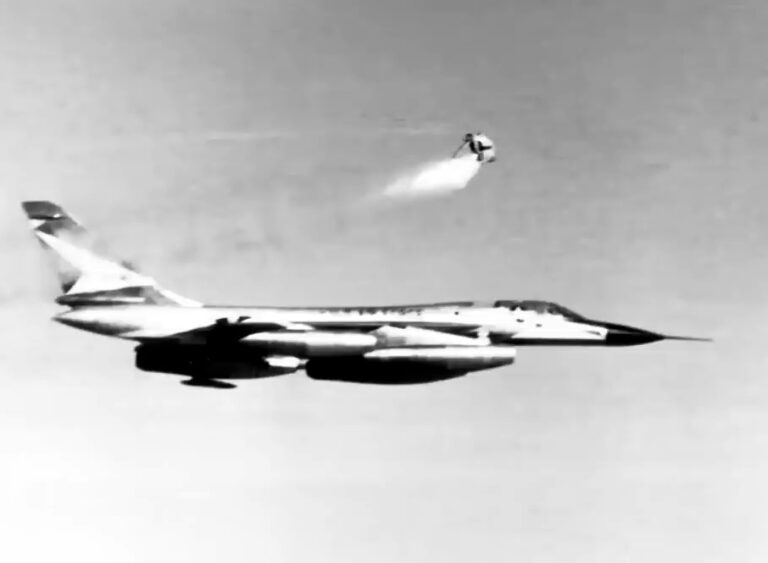
The creation of the B-58 Hustler Bomber resulted in the world’s first supersonic plane, going Mach 2 or twice the speed of sound. But with this development, the U.S. Air Force discovered that it needed to overhaul long-used crew ejection methods to ensure the survival of the three-man crews expected to fly this plane.
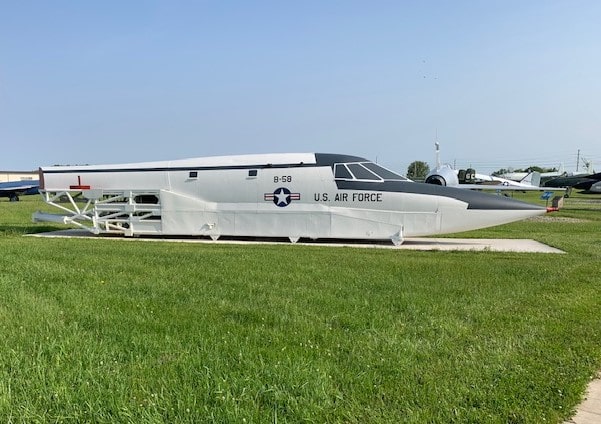
While the Stanley Aircraft Company would be charged with creating the ejection seats, Convair aided in the process by producing the B-58 Rocket Sled. Using a scale model of the B-58’s fuselage, the sled was outfitted with rails that would allow engineers to pull the structure to recreate the speed of the plane. From here, different chair designs were assessed using animal test subjects in place of humans, many of whom did not survive this phase of testing. In addition to the Mach 2 speeds, the seats had to withstand altitudes of up to 70,000 feet.
Eventually, Stanley produced the clam-shell design that would be installed in all B-58 planes during the run of the program. You can see a version of this seat and learn more about its development as part of our Supersonic exhibit inside the Heritage Museum.
The sled was used exclusively at Holloman Air Force Base in Otero County, New Mexico. After the retirement of the B-58 in 1969-1970, the sled was pressed into testing service for other programs at Holloman. It was first donated to the 8th Air Force Museum located at Barksdale AFB in Louisiana and became part of the National Museum of the U.S. Air Force’s vast collections. In 2018, the NMUSAF had this one-of-a-kind artifact moved to the Grissom Air Museum to join B-58 Hustler Bomber #0663 in our collections. While the plane has been moved into the Cervantes Building, the sled remains on display inside the Air Park.
Fun Fact! Famed astronaut Neil Armstrong was one of several test pilots who used the B-58 Rocket Sled.