Base History: Bunker Bill Naval Air Station
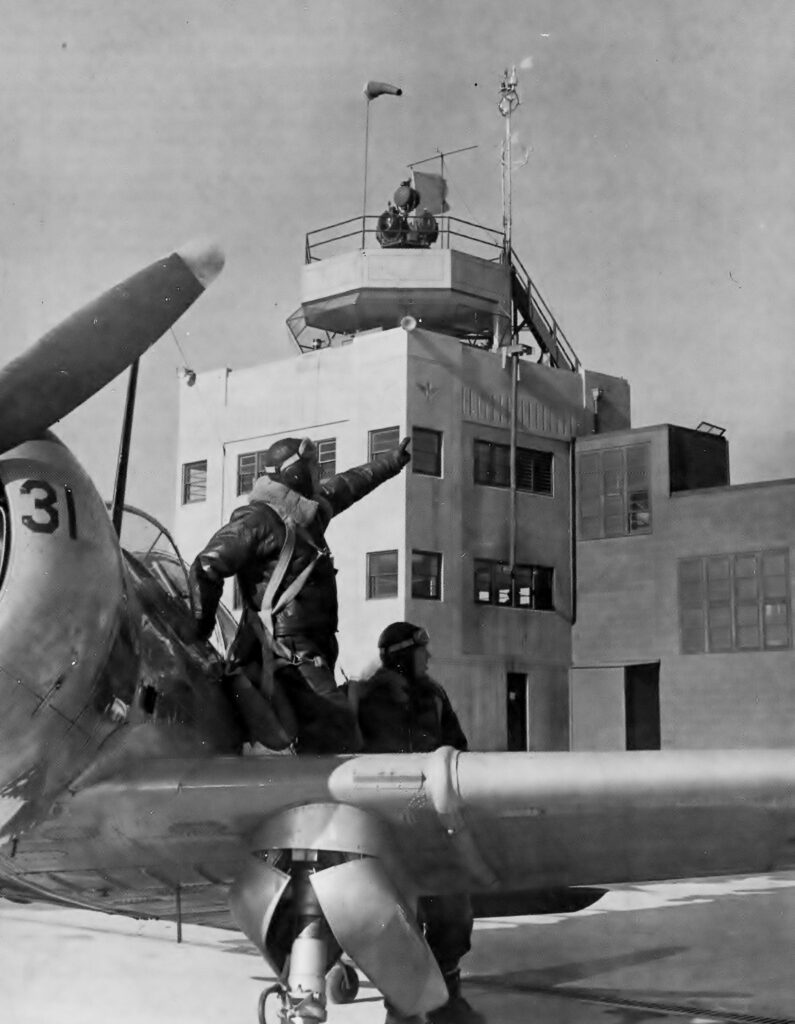
Top: Two cadets sit outside the control tower in 1943.
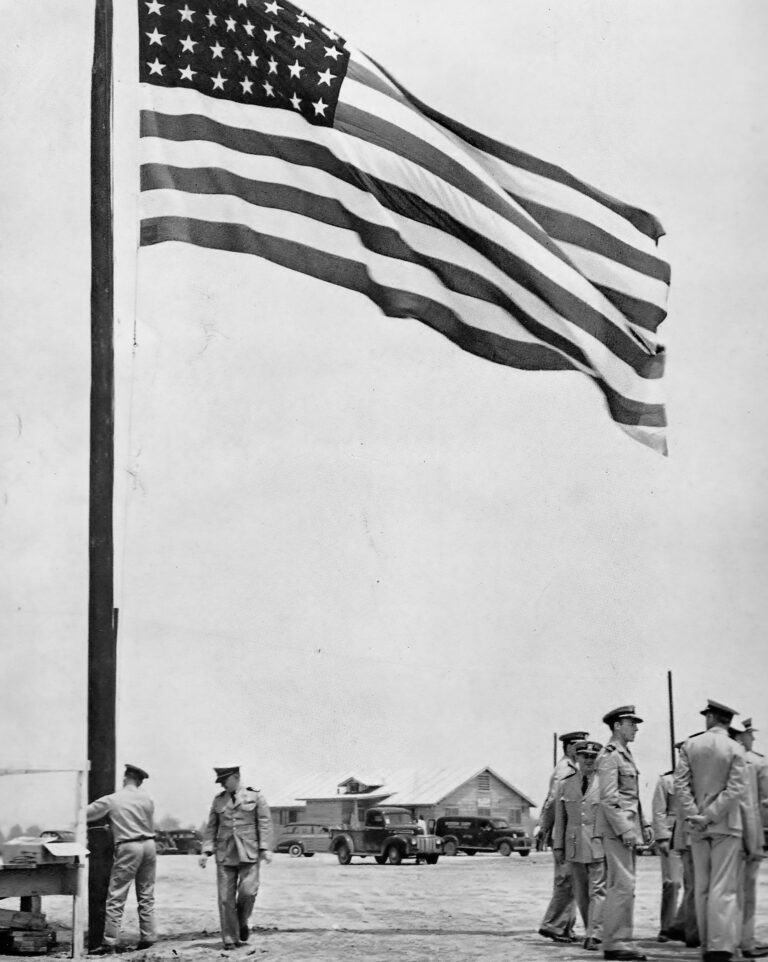
Middle: The first flag to be flown at Bunker Hill NAS is raised.
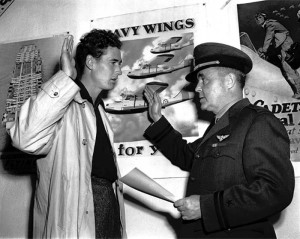
Bottom: Red Sox outfielder Ted Williams take the oath at his recruitment in 1942. Williams would conduct his intermediate flight training at Bunker Hill NAS.
Originally designated as Naval Reserve Air Base Peru, Bunker Hill NAS was built to serve as a training facility for Navy and Marine Corps pilots. Within seven months of its July 1942 opening, the Navy renamed it Naval Air Station (NAS) Peru and then shortly thereafter NAS Bunker Hill, after a local community.
The cost for the base was approximately $7 million ($142 million in 2026) and included both the purchase of the land and construction of over 20 buildings, utility infrastructure, several landing pads, and the tarmac. The base was intended to cover nearly 4,700 acres, which included several off-site auxiliary fields within a twenty mile radius of the base’s main location. While the bids were accepted in April of 1942, the commission and arrival of the first personnel took place only three months later in July. The full scope of the base wouldn’t be completed until 1943. The final cost ballooned to over $13 million ($250 million in 2026).
The location for the NAS was nearly perfect for the Navy’s Site Selection Board – it was close to major cities without being obstructed by commercial flight paths, accessible via major state roads and even a railroad, had steady weather patterns, and the land was flat. Minus a timber area covering nearly seventy acres, the level and clear ground around the site made it easy for the construction of the tarmacs, land pads, and buildings.
The first buildings were timber constructed and later replaced with more permanent steel structures. Companies local to the area and the northern Indiana region all submitted bids for projects ranging from design to construction. The Russel B. Moore Co. from Indianapolis won the architectural and engineering contract while J.L. Simmons Co. from Indianapolis joined forces with United Construction Company from Winona, MN to win the construction bid.
The Base was fully operational by 1943 and was fairly self-contained. In addition to the expected admin buildings, barracks, mess halls, and common buildings, the base also included training structures, hangers that house flight and maintenance crews, utility plants, and gas storage. In addition to the numerous flight-focused areas of the base, a large-scale pool was constructed to serve as a water survival training facility. At 75 ft x 150ft, the indoor pool was – at the time – the second largest of its kind in the world. It was designed to simulate the height of aircraft carrier and primarily used for safety and abandonment drills.
Throughout World War II, nearly 6,000 cadets were trained at Bunker Hill, with a little over three quarters advancing to Intermediate Flight Training in Pensacola, FL. Just over 850 were sent to the Naval Station Great Lakes, just north of Chicago, to be reassigned to other duties. In addition to these students, Bunker Hill also trained just over 700 British Royal Navy cadets. The immense amount of students passing through the base meant that a quarter of all N2S-3 Kaydet trainers (407) were located at Bunker Hill by war’s end.
After the war, the Navy recalled nearly all of the NAS’ personnel and reverted most of the base’s land farm fields. The buildings were kept under the care of civilian caretakers, however, these often changed hands and by the 1950s, Bunker Hill NAS was in rough shape. It’s future hinged on a new owner, which would come in the shape of the newly formed U.S. Air Force.