LOCKHEED T-33A T-BIRD
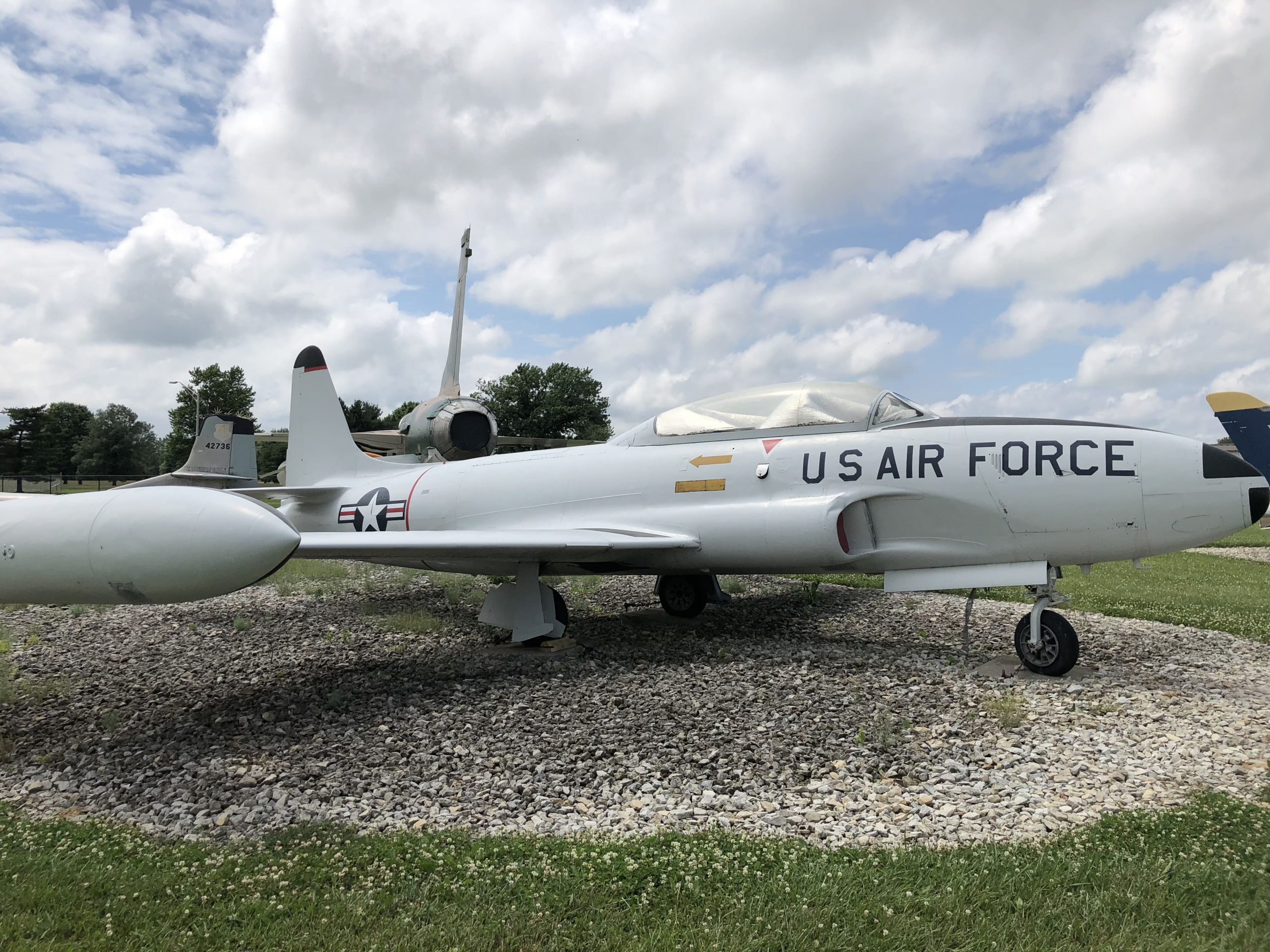
The two-place T-33 jet was designed for training pilots already qualified to fly propeller-driven aircraft. It was developed from the single-seat F-80 fighter by lengthening the fuselage slightly more than three feet to accommodate a second cockpit.
Originally designed the TF-80C, the T-33 made its first flight in March 1948. Production continued until August 1959 with 5,691 T-33s built.
In addition to its use as a trainer, the T-33 has been used for such tasks as drone director and target towing, and in some countries even as a combat aircraft. The RT-33A version, reconnaissance aircraft produced primarily for use by foreign countries, had a camera installed in the nose and additional equipment in the rear cockpit.
The T-33 is one of the world’s best known aircraft, having served with the air forces of more than 20 different countries for almost 40 years. Many are still in use throughout the world.
The T-33 is a primary jet trainer, with the student in front and the instructor in the rear.
In use for over forty years, the T-33 was used to train three generations of pilots. The T-33 is a stretched version of America’s first jet fighter, the P-80. Later, the F-94 used a modified P-80 airframe.
Flown first in 1947, T-33’s were used by the USAF Thunderbirds and are still in use by the Canadian Air Force.
| SPECIFICATIONS | |
| Span: | 37 ft. 6 in. |
| Length: | 37 ft. 6 in. |
| Height: | 11 ft. 7 in. |
| Weight: | 15,000 lbs. max. |
| Armament: | Two .50-cal. machine guns in nose, 2,000 lbs. of bombs |
| Engines: | One Allison Engine J-33 with 5,400 lbs. thrust |
| Crew: | Two |
| Cost: | $ 123,000 |
| Tail Number: | 52-9583 |
| Years in Service: | 1950-1991 |
| PERFORMANCE | |
| Maximum Speed: | 525 mph |
| Cruising Speed: | 455 mph |
| Range: | 1,000 miles |
| Service Ceiling: | 45,000 feet |